Relationship of fillet weld size to strength (Theory)
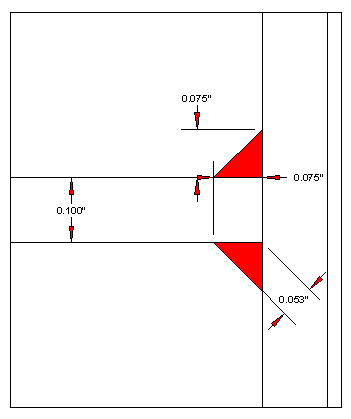
Below is a sketch showing the relationship of a fillet weld size to the effective throat of the weld. For a statically loaded structure this type of weld sizing would achieve an effective throat that meets the thickness of the members being welded. Using an equal leg fillet on both sides with a leg size that is 75% of the material thickness would meet the the thickness of the thinner member.
A dynamically loaded item may require welds of a different size. Another option on thicker materials is to bevel the pieces to achieve a CJP weld. This is why engineers are used. Consult with an engineer if this is something that a failure of could cause any damage.
Since October 9, 2004